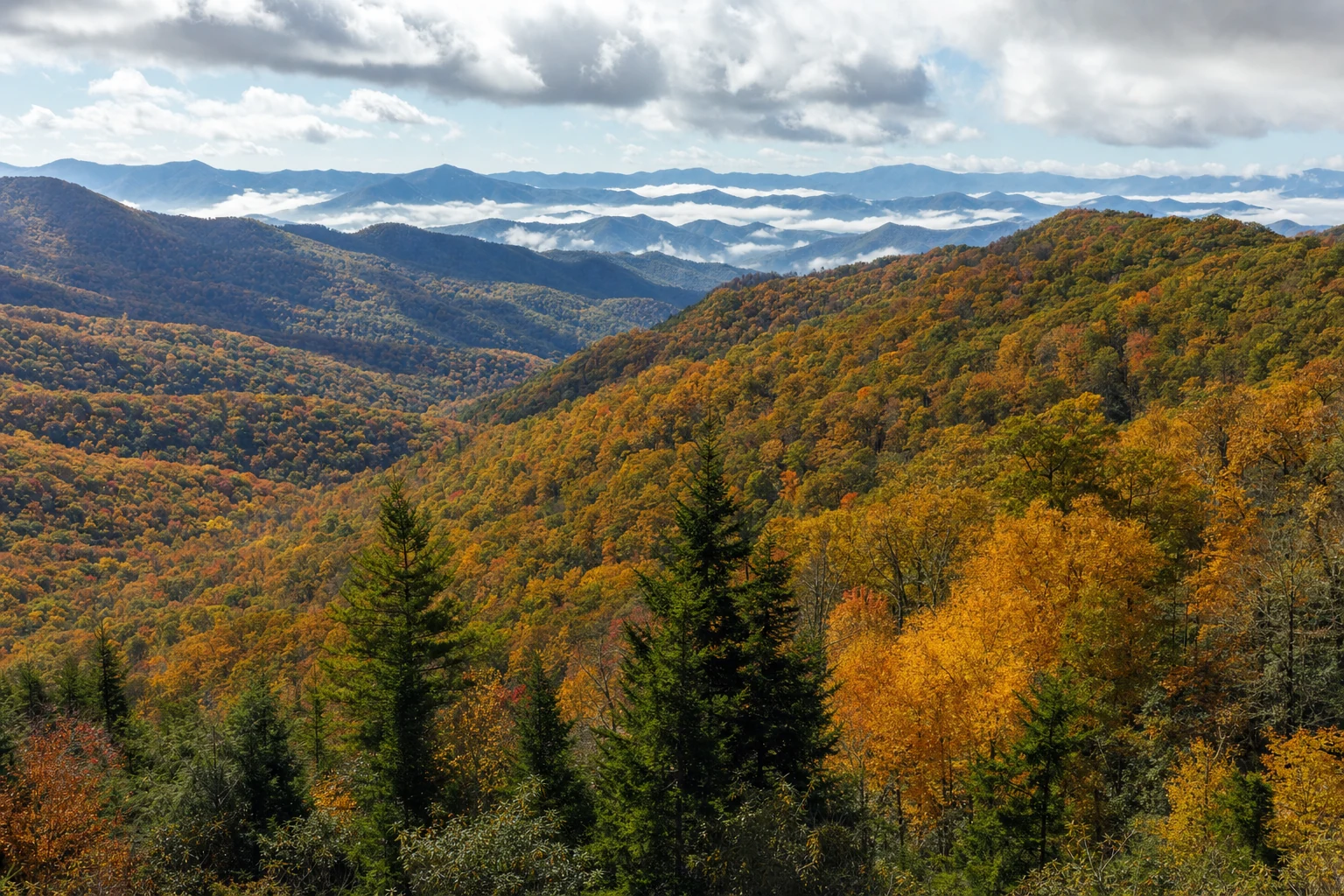

About West Prong Trail:
West Prong Trail occupies a quieter corner of the park than most easy hikes in GSMNP, sitting in the Tremont drainage on the western side where the roads thin out and trailhead crowds don't follow. Two miles one-way, rated Easy by the NPS, it suits people who want authentic park forest without a demanding climb and pairs naturally with longer routes that start from the same complex.
Getting to Tremont
Tremont is reached via Laurel Creek Road, which branches off Little River Road in the western portion of GSMNP. From the Gatlinburg park entrance at Sugarlands, follow Little River Road west through the park, then turn south onto Laurel Creek Road toward the Tremont area. The drive runs roughly 25 to 35 minutes from downtown Gatlinburg; from Townsend or Wears Valley it's considerably shorter and more direct.
A Park It Forward parking tag is required anywhere inside GSMNP for stops over 15 minutes: $5 daily, $15 weekly, $40 annual, available through recreation.gov or at visitor center kiosks. Summer weekends at Tremont fill faster than many people expect, given how much the area rewards early arrivals. Arriving after 10am on a July Saturday may mean finding the trailhead lot full.
The Great Smoky Mountains Institute at Tremont is located near the trailhead complex, a residential environmental education center that runs school and public programs in the park. If you encounter student groups hiking on a weekday morning, that's where they're based.
The Trail
Rated Easy doesn't mean manicured. Roots and occasional rocks cross the path; if rain has come through recently, sections near the stream stay damp underfoot. What the trail doesn't have is sustained elevation gain or exposure above treeline. The forest stays close on both sides, the grade stays manageable, and the West Prong runs alongside or within earshot for much of the route.
Plan for a four-mile round trip total, which most hikers cover in two to three hours at a relaxed pace. The route runs one-way into the backcountry, so unless you've arranged a shuttle or connected to another trail, you return the same way you came. The one-way format actually works in its favor: you don't feel the pressure to push to a summit or turnaround landmark; you go until the forest tells you it's time to come back.
What the Forest Looks Like
The Tremont corridor escaped some of the most intensive logging that cleared large sections of what became the park before its establishment. Old-growth remnants survive, particularly larger hemlocks and tulip poplars whose canopy closes over the trail in summer and drops yellow and gold into October. Woolly adelgid has affected hemlock populations throughout the park, but Tremont has had active treatment programs and substantial trees remain standing.
Spring is when the understory does the most work. Trout lily, trillium, fire pink, and bloodroot follow each other from late March into May, with bloom timing shifting year to year depending on winter temperatures. You can't schedule a specific date and guarantee any particular flower; you pick a window and go. The reward for getting the timing right is a forest floor that doesn't look like this for long.
The stream itself carries the hike. Running water defines the Tremont experience more than elevation or views, and the West Prong section keeps it in earshot or in sight for enough of the route that the sound of it becomes the consistent backdrop.
Combining Trails
West Prong Trail shares the Tremont area with Middle Prong Trail, which runs four miles one-way at a Moderate rating and passes multiple waterfalls along its length. If two miles feels short for the drive out, adding a stretch of Middle Prong on the same trip makes the day more substantial without requiring separate planning or a different trailhead. The two trails give you a very different experience of the same drainage.
Seasonal Notes
Summer visits work best early. The Tremont road is narrow and the trailhead has limited parking; arriving before 8am in July or August gets you in before the rush and onto the trail before the humidity thickens. The closed forest canopy keeps West Prong Trail notably cooler than exposed ridge hikes, which matters considerably in July.
Fall is the park's peak season across the board, and Tremont's mixed hardwood forest shows strong color through mid-to-late October. Crowd pressure here isn't as extreme as at Newfound Gap or Clingmans Dome, partly because Tremont is a dead-end road rather than a drive-through corridor; only people who came specifically for this area show up.
Winter is genuinely appealing if you're prepared. The road to Tremont stays open in normal conditions, and a January or February morning on West Prong Trail delivers the forest essentially to yourself, sharp air, and the stream running loud through bare branches. Ice patches on the trail are possible from late November through February; microspikes earn their place in your pack on any cold-morning visit.
Before You Go
Carry more water than you expect to need. Stream water in the park requires treatment before drinking, so don't plan on refilling from the West Prong. A rain layer pays for its weight on any GSMNP hike regardless of morning forecast; afternoon cloud buildup hits the western drainages fast. A warm layer matters even in June at elevation.
Black bears range throughout Tremont and are frequently active near stream corridors. Keep 50 yards of distance, store food in your car's trunk rather than the passenger compartment, and don't leave anything scented accessible at the trailhead. Trail incidents are rare, but the bears here are genuinely wild. Cell service is unreliable throughout the Tremont corridor, sometimes spotty from the moment you turn off Little River Road. Download NPS offline maps before you leave town or pick up a paper trail map at Sugarlands Visitor Center near the Gatlinburg park entrance.
Frequently asked questions
- Do I need a parking tag?
- Yes — a Park It Forward parking tag is required for vehicles parked more than 15 minutes anywhere inside Great Smoky Mountains National Park. Daily ($5), weekly ($15), or annual ($40) tags are available via recreation.gov or park kiosks.