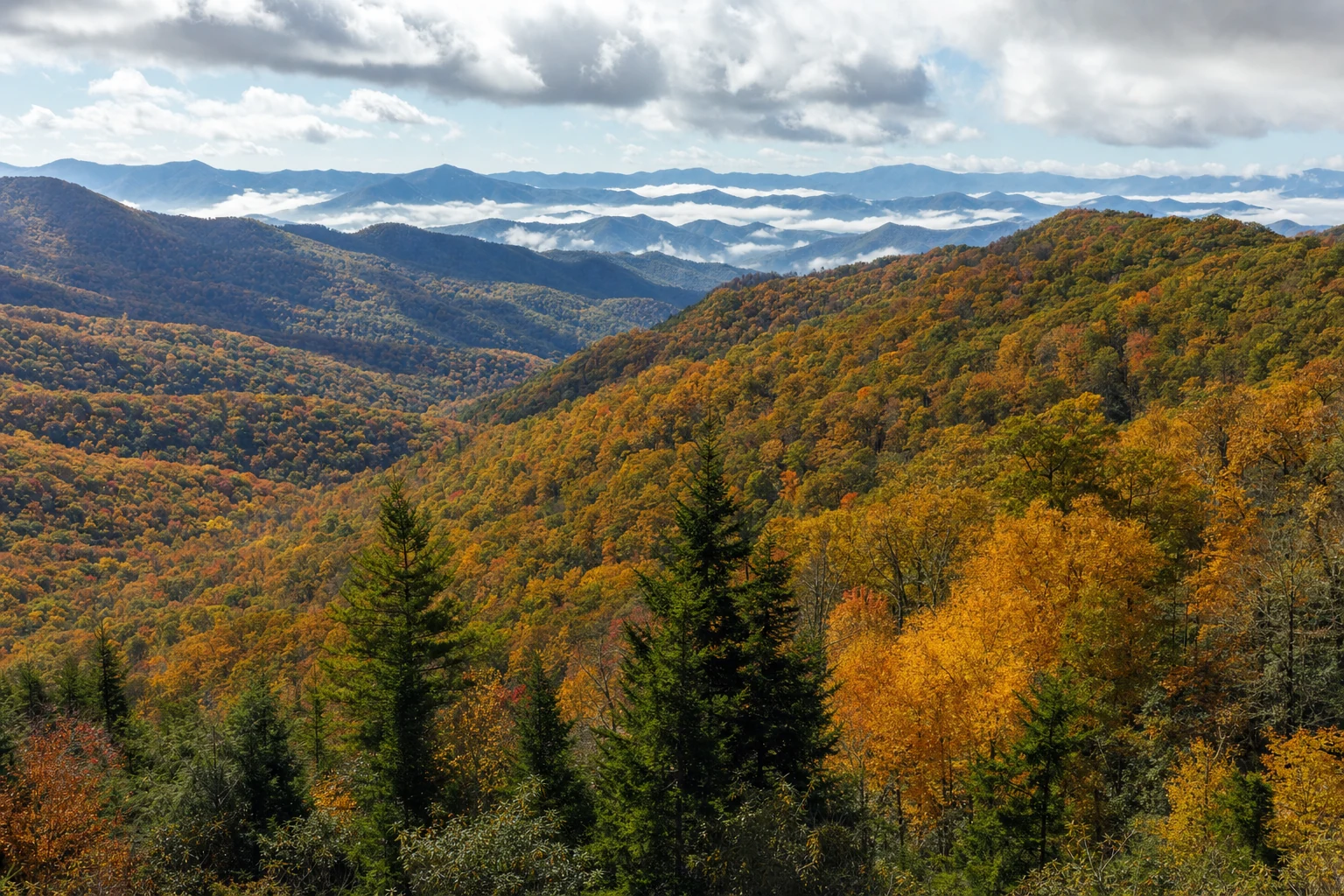

About Whiteoak Sink Trail (seasonal access)
Now I'll write the body copy using the anti-slop rules and the factual constraints.
---
Whiteoak Sink is one of the stranger landscapes in Great Smoky Mountains National Park — a karst basin where the ground collapses into sinkholes, caves, and arched rock formations instead of running off in streams. The trail to reach it branches from Schoolhouse Gap Trail near Townsend, on the Tennessee side of the park. Access is seasonal and sometimes restricted entirely, so check NPS status before you build a trip around this one.
Trail at a glance
The route runs out-and-back from Schoolhouse Gap Trailhead (35.6320° N, 83.7440° W), rated moderate. Total distance and elevation gain vary depending on how far into the sink basin you explore; the terrain opens into multiple features rather than tracking toward a single defined endpoint. The trailhead sits off Laurel Creek Road near Townsend, not Gatlinburg, so build in the drive time accordingly.
Park-It-Forward parking tags are required for stays over 15 minutes anywhere inside GSMNP: $5 daily, $15 weekly, or $40 annually. Buy through recreation.gov or at park kiosks before you head out.
The geology is the point
Most GSMNP trails deliver waterfalls or ridgeline views. Whiteoak Sink takes you somewhere the earth has dissolved into itself. The basin is a karst depression, formed where underlying limestone slowly dissolves and the surface above drops. The result: a bowl-shaped landscape with cave openings, natural arches, and sinkholes that drain water underground rather than into visible streams.
This kind of topography is genuinely rare in the park. The rock formations aren't dramatic in the way a cliff face is; they're strange in a quieter way, the kind of place that reads wrong until you understand what made it. If you've only hiked forest trails or waterfall routes in the Smokies, the sink feels like a different park entirely.
Seasonal access and bat closures
The trail carries one of the more specific access restrictions anywhere in GSMNP: it closes during certain seasons to protect bat colonies that roost and hibernate in the caves. The NPS enforces these closures without exceptions, and the exact schedule isn't fixed year to year — species surveys and conditions can shift the dates.
Check nps.gov/grsm for current trail status before you drive to the trailhead. Arriving at a locked gate after an hour of driving is a preventable outcome. This isn't bureaucratic caution; the bat populations using these caves are genuinely sensitive to disturbance during hibernation, and closures in GSMNP over similar concerns have been enforced for years. The NPS page for the sink is at nps.gov/grsm/learn/nature/whiteoak-sink.htm and is the authoritative source for current status.
If the trail is open, stay on marked routes. Some cave openings look inviting. Exploring them without appropriate gear and training risks both you and the habitat the restrictions exist to protect.
Spring wildflower season
Timing a Smokies trip around wildflowers and want something off the main circuit? Whiteoak Sink has a legitimate case for consideration. The basin's protected, humid microclimate supports rare species that don't establish well on exposed ridgelines or high-traffic stream corridors. Spring is the window — typically running from late March into early May, with the precise peak depending on elevation and that year's temperature progression.
The plant community here draws serious botanical visitors, not just hikers passing through who notice flowers along the way. That distinction matters: you're not looking at a general Smokies wildflower display, you're looking at a habitat that concentrates rare flora because the geology creates conditions nothing else in the park replicates.
Come on a weekday if possible. Spring weekends fill Schoolhouse Gap Trailhead quickly, and the trailhead pulls traffic even from hikers not headed to the sink. An early start on a Tuesday beats a Saturday midmorning by a significant margin in terms of parking and solitude.
Getting there
Schoolhouse Gap Trailhead is off Laurel Creek Road (TN-73) between Townsend and the Townsend Wye junction inside the park. From Gatlinburg, take US-441 south through the park and then head west on Little River Road toward Townsend — plan on 45 minutes to an hour depending on season and traffic. From Townsend town itself, you're closer to 15-20 minutes.
Cell service inside the park is unreliable. Download offline maps before you leave, or note the driving directions and trailhead coordinates (35.6320° N, 83.7440° W) somewhere you can access without a signal. The GSMNP app includes offline trail maps that function without connectivity.
Laurel Creek Road congests badly during peak season, particularly on weekends near Cades Cove. Leaving before 9am is a practical solution, not just a suggestion.
Know before you go
The moderate rating is accurate for reasonably fit hikers, but "moderate" in the Smokies consistently means uneven footing, some elevation change, and trail conditions that shift with weather. Wear footwear with grip — trail runners or hiking boots. Road shoes on wet roots are a hazard.
A few specifics worth noting before you head out:
- Water: carry more than you think you'll need. The sink collects water underground; any surface sources require treatment or filtration.
- Weather: afternoon thunderstorms develop fast in summer with little warning. Pack a rain layer and something warm even if the morning looks clear.
- Bears: black bears range throughout GSMNP and Schoolhouse Gap area is no exception. Keep 50 yards of distance, store food in your vehicle or a bear canister, and don't leave a pack unattended at the trailhead.
- Terrain caution: the ground near sinkhole edges can be unstable. What looks solid at the rim of a depression may not be. Stay on marked routes and keep kids and dogs close.
There's no trail fee, but the Park-It-Forward parking tag is mandatory and rangers check. The fine for missing it is not worth the gamble.
Frequently asked questions
- Do I need a parking tag?
- Yes — a Park It Forward parking tag is required for vehicles parked more than 15 minutes anywhere inside Great Smoky Mountains National Park. Daily ($5), weekly ($15), or annual ($40) tags are available via recreation.gov or park kiosks.