
Camping
Best Campgrounds in the Smokies
16 curated picks · verified 2026-05-28
Camping options in and around the Smokies range from no-frills tent sites inside the national park to full-hookup resorts ten minutes from Gatlinburg's main strip. The 16 picks on this page cover that full range, weighted toward trail access, site quality, and realistic booking windows for peak-season travel.
Four sit inside Great Smoky Mountains National Park: Elkmont and Cosby on the Tennessee side, Smokemont on the North Carolina side near Cherokee, and Cades Cove in the valley known for its 19th-century homesteads and year-round wildlife. These are the most logistically demanding picks because they fill fast, but they're also the ones where you fall asleep to a creek instead of a neighboring generator. Reservations open six months in advance on recreation.gov, and if Elkmont or Cades Cove is your target, book the day that window opens.
A few things to sort out before you commit:
- Park-It-Forward parking tag: GSMNP charges a per-day parking fee at most trailheads and developed areas. Overnight campers with a valid park reservation are exempt at their campsite, but day hikes during your stay still require a tag.
- Bear storage: All food, cookware, and scented items must go in provided bear boxes overnight. The park enforces this; rangers do issue citations.
- Cosby vs. Elkmont: Cosby handles a fraction of Elkmont's visitor volume despite similar trail quality, making it the better choice if your dates are flexible and you'd rather skip the crowds.
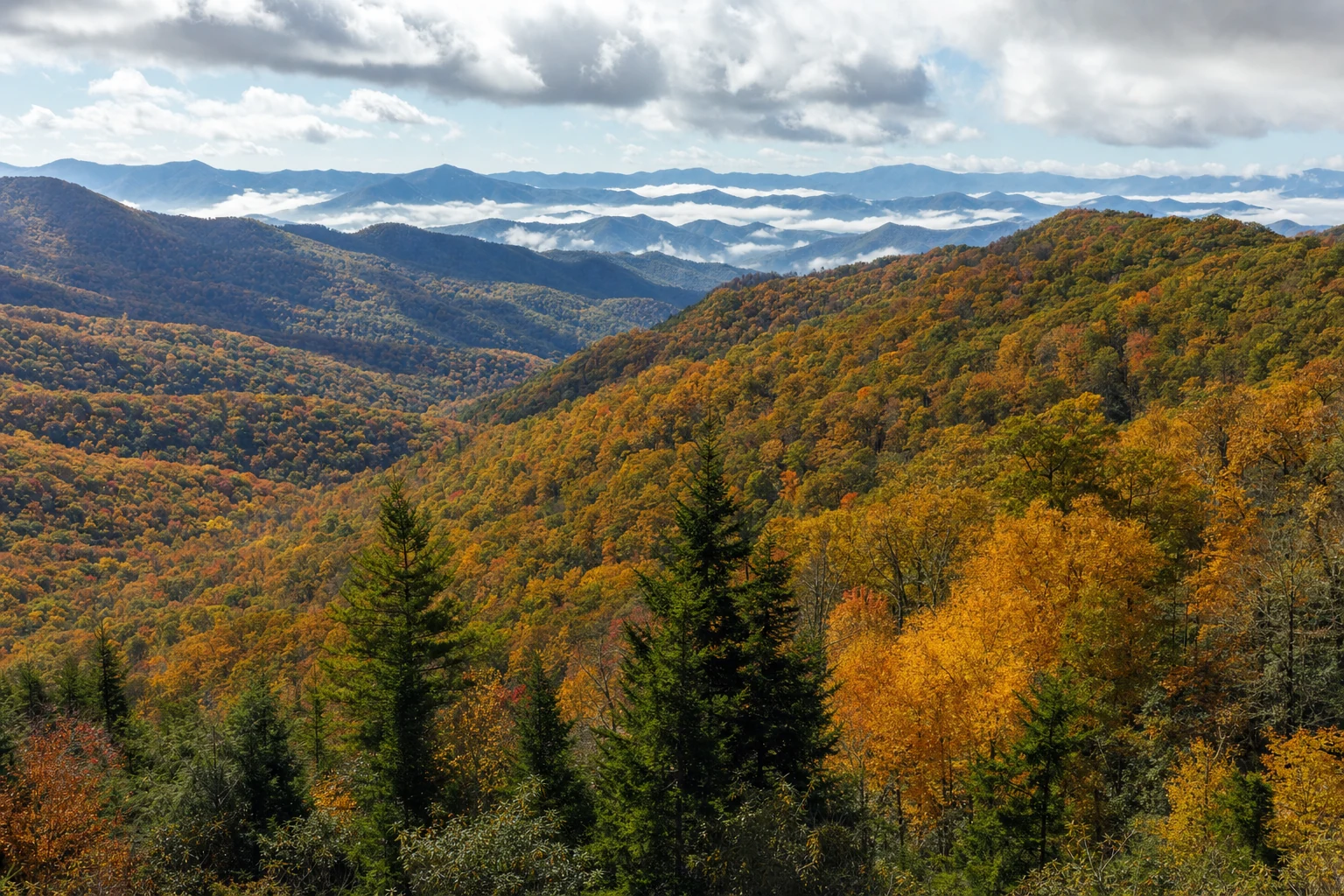
- Timing: Fall foliage peaks around late October at lower elevations and draws the year's highest visitor counts. May is consistently the stronger camping month: better weather odds, wildflowers, and far fewer people than July.
The private campgrounds and USFS picks (Davidson River in Pisgah National Forest, Indian Boundary in Cherokee National Forest) typically offer longer seasons, better hookup availability, and easier reservations than the national park sites, which matters considerably if you're traveling with a large RV or need a fallback when the park books out.
- 1
Elkmont Campground
frontcountry · 220 sites
Located along the Little River, Elkmont is one of the most popular campgrounds, known for its scenic beauty, proximity to hiking trails (e.g., Laurel Falls, Gatlinburg Trail), and the historic Elkmont Ghost Town.
- 2
Little Arrow Outdoor Resort (formerly Little Arrowhead)
private · 200 sites
Private campground near Gatlinburg with 200 sites.
- 3
Cades Cove Campground
frontcountry · 159 sites
Located within the iconic Cades Cove loop, this campground offers easy access to the valley's historic sites, wildlife viewing, and hiking/biking opportunities.
- 4
Cosby Campground
frontcountry · 157 sites
A more rustic and quieter option on the Tennessee side, Cosby is known for its peaceful atmosphere and access to challenging hiking trails.
- 5
Cherokee / Great Smokies KOA Holiday
private · 150 sites
Private campground near Cherokee with 150 sites.
- 6
Smokemont Campground
frontcountry · 142 sites
Situated on the North Carolina side of the park, near Cherokee, Smokemont offers a similar experience to Elkmont with tent and RV sites (no hookups).
- 7
Davidson River Campground
usfs · 140 sites
Usfs campground near Cherokee with 140 sites.
- 8
Gatlinburg KOA Holiday
private · 100 sites
Private campground near Gatlinburg with 100 sites.
- 9
Greenbrier Campground
private · 100 sites
Private campground near Gatlinburg with 100 sites.
- 10
Indian Boundary Campground
usfs · 100 sites
Usfs campground near Cherokee with 100 sites.
- 11
Pigeon River Campground
private · 100 sites
Private campground near Gatlinburg with 100 sites.
- 12
Riverbend Campground
private · 100 sites
Private campground near Gatlinburg with 100 sites.
- 13
Smoky Bear Campground & RV Park
private · 100 sites
Private campground near Gatlinburg with 100 sites.
- 14
Smoky Mountain Premier RV Resort
private · 100 sites
Private campground near Gatlinburg with 100 sites.
- 15
Townsend / Great Smokies KOA Holiday
private · 100 sites
Private campground near Townsend with 100 sites.
- 16
Turkey Creek RV Park
private · 100 sites
Private campground near Gatlinburg with 100 sites.
Good to know
Best Campgrounds in the Smokies: FAQ
Do I need a reservation to camp at Elkmont or Cades Cove?
What's the difference between the national park campgrounds and the private ones on this list?
When is the best time to camp in the Smokies?
Are campfires allowed at these campgrounds?
How serious is the bear risk at campgrounds inside the park?
Where to stay
Near Smokies campgrounds
Pick your spots, then lock in where you'll sleep. Compare live cabin, hotel, and rental prices nearby across Booking.com, Vrbo, and Expedia.
Map powered by Stay22. Prices and availability update live.
Keep exploring